
 By
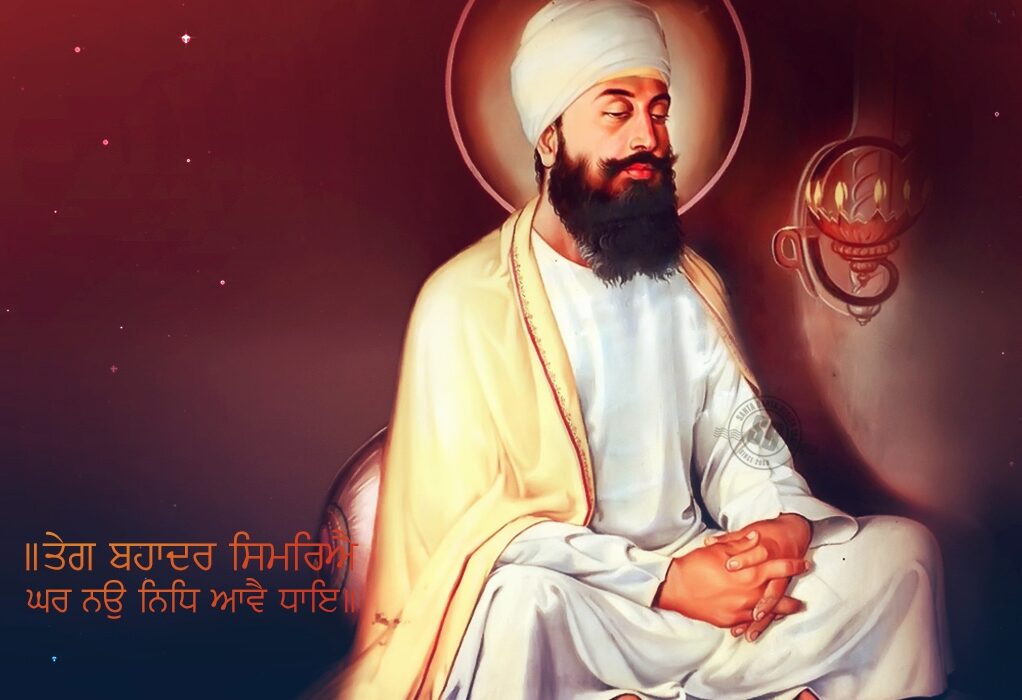
By Three hundred and fifty years ago, the world witnessed a moment of moral clarity that remains unmatched in human history. In 1675, Sri Guru Tegh Bahadur Sahib Ji, the Ninth Guru of the Sikhs, chose martyrdom to defend not his own community but the fundamental right of others to practice their faith freely. His sacrifice was an act of universal moral leadership at a time when tyranny was tightening its grip.
Much later, the Enlightenment thinker Voltaire popularised the sentiment, “I disagree with what you say, but I would defend to the death your right to say it.” It is a powerful principle.
Yet Guru Tegh Bahadur Sahib Ji had already lived it in practice a full century before Voltaire was even born. He did not simply write about defending freedom of belief. He walked into the heart of the Mughal Empire, fully aware of the consequences, to protect the rights of the Kashmiri Pandits who were facing forced conversion.
Guru Tegh Bahadur Sahib Ji defended the freedom of people who belonged to a different faith and who held different beliefs. He stood for them because he stood for humanity itself. In doing so, he gave the world an example of principled courage that remains profoundly relevant today.
The Ninth Guru’s Shaheedi was not an act of martyrdom for Sikhs alone. It was an assertion of a universal idea: freedom of conscience is not negotiable. It is a right that belongs to every human being, not just those who look like us, worship like us or agree with us.
This message matters now more than ever. The world is becoming increasingly polarised. Religious minorities continue to face persecution. Democracies are strained by rising authoritarian tendencies. Public debate grows more toxic and unforgiving. It is easier than ever to dehumanise those who are different.
Guru Tegh Bahadur Sahib Ji challenges us to do the opposite. He calls on us to extend empathy beyond our own identities and interests. He asks us to stand up for those who do not share our views, our politics or our beliefs. True courage, he teaches, lies in defending the rights of others even when we gain nothing from it and risk something in doing so.
There is another dimension to the Guru’s legacy that resonates strongly today. His writings offer guidance on resilience, inner peace and ethical living at a time when mental health crises and social anxiety are widespread.
Hymns written by the ninth Guru, reminds us that clarity comes from truth, stability from principle and courage from compassion. These teachings are not abstract or distant. They offer practical wisdom for individuals living through uncertainty and for societies facing division.
In a world where outrage often replaces understanding, Guru Tegh Bahadur Sahib Ji offers an alternative model of strength. A strength rooted in calm, conviction and the unwavering belief that doing what is right is more important than doing what is convenient.
Marking the 350th anniversary of his Shaheedi is not simply an act of remembrance. It is a call to conscience. It invites us to look at ourselves and our societies and ask difficult questions.
Are we willing to defend the rights of people we disagree with?
Are we willing to speak up when the vulnerable are targeted?
Are we willing to place humanity above identity?
Guru Tegh Bahadur Sahib Ji did all of this. He showed us that the defence of freedom is not the responsibility of governments or institutions alone. It is the responsibility of individuals who choose courage over silence.
The legacy of Guru Tegh Bahadur Sahib Ji is timeless because it speaks to the deepest challenges facing humanity. Oppression flourishes when people remain silent. It falters when even one person chooses to stand firm.
As we commemorate 350 years of his sacrifice, we are reminded that history does not only honour what he did. It asks us what we will do.
The Ninth Guru showed us the path. It is now our responsibility to walk it.