
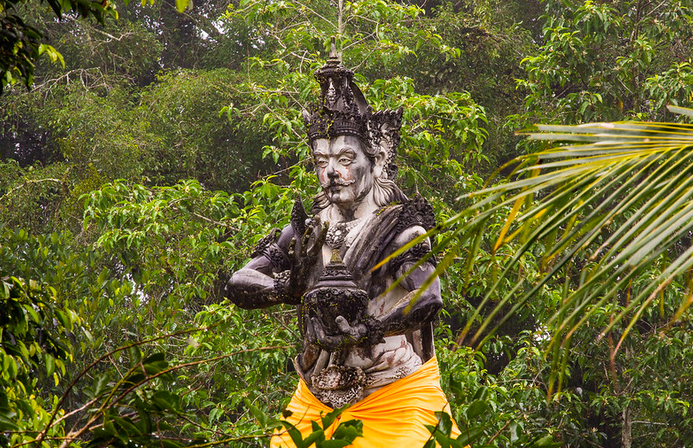
 By
By Contrary to the broader Indonesian population, where Islam is the dominant religion, the island of Bali stands out as a Hindu-majority region, with 87% of the population identifying themself as what they call “Agama Hindu Dharma”.
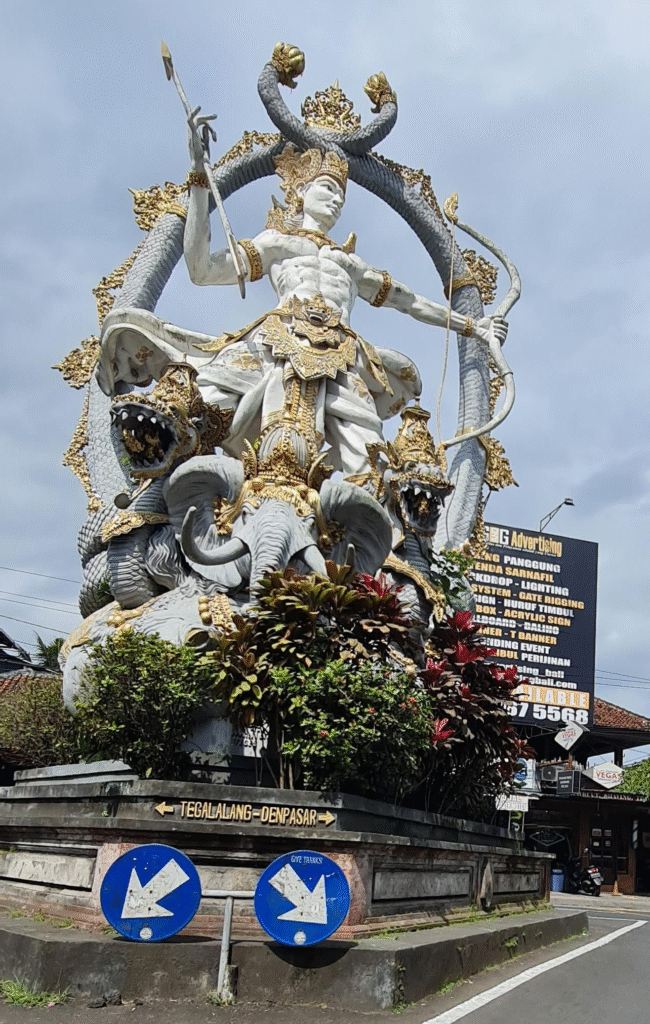
Since arriving on the island, it has been fascinating to see not only the reverence the locals have for their faith, but how different the Hindu faith here was from what I had seen before in India and across the world.
Firstly, a majority of Balinese practice a form of Hinduism that is entwined with Buddhist and animistic beliefs.
The history behind this goes back to the founding fathers of modern day Indonesia, who whilst deciding the the state ideology, drafted the ‘Pancasila’ which only allowed monotheistic religions to flourish in the country. For a religion to be considered valid, it needed to be believe in only one God, have a defined set of doctrines, a holy book, uniform prayer rituals, and international recognition.
What followed was a tale of ingenuity, as the Balinese Hindus worked to reshape their ancient faith to fit the mould of a ‘valid religion’. They standardised their practices, adopted uniform prayer rituals, and even found a way to make the ‘Gayatri Mantra’, a sacred Hindu chant, a part of the daily rhythm of Indonesian life.
Another distinct “Bali Hindu” approach noticeable is that in the temples of Bali, there are no idols (murti’s), no images of God, and therefore no concept of darshan, or sight, of the murti. During puja, they focus the mind on the temple’s pedestal or padmasana and invite God to come; then they make offerings.
Whilst live theatre and dramatisation of the Ramayan and Mahabharat are hugely popular in Bali, surprisingly Diwali is not celebrated on the island. Instead the biggest Hindu festival in Bali is the ten-day Galungan. It signifies the time when ancestor spirits come home, culminating on the 10th day of Kuningan when they depart. The Balinese Hindus also celebrate their “New Year” in March with a “Day of Silence”, where they do not leave their home for 24 hours and instead pray and self reflect on their actions over the past year. On this day, they are not allowed to light fires, and restricted to no working, no entertainment, no travelling, and for some, no talking or eating at all.
Travelling around Bali, I can’t help but be struck by the incredible resilience and adaptability of the Balinese Hindu community. Faced with the threat of erasure, they had not only survived but thrived, forging a new identity that was at once true to their ancient roots and compatible with the demands of the modern Indonesian state. It’s a testament to the power of community in sustaining and nurturing faith, something that communities worldwide, regardless of religion, can learn from.