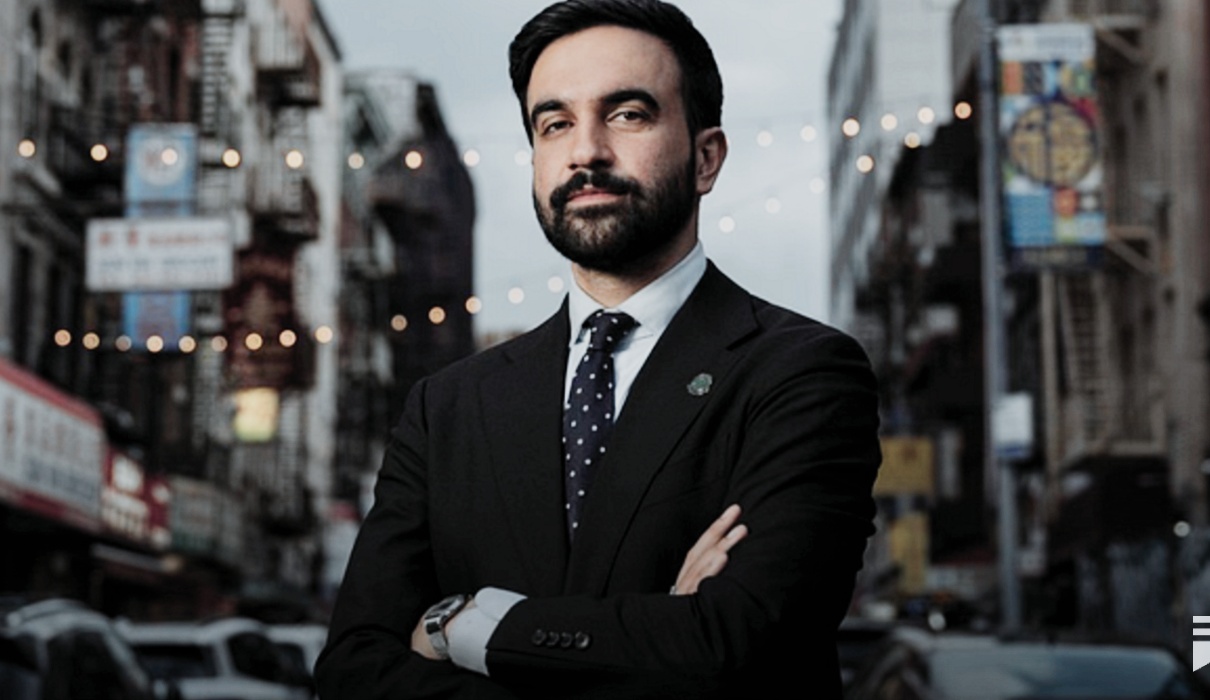
In a political moment defined by global uncertainty, disenchantment with the establishment, and generational cries for justice, Zohran Mamdani’s rise as the Democratic Party’s nominee in the race for New York City Mayor marks a profound turning point – not just for American politics, but for progressive movements around the world.
Born in Kampala, raised in New York City, and shaped by a South Asian, African, and Muslim heritage, Mamdani embodies the pluralism that urban democracies often tout but rarely empower. A housing rights activist, rapper, and democratic socialist, his candidacy was once viewed by mainstream observers as a protest campaign. Today, he stands on the brink of making history as the first mayor of one of the world’s most influential cities with roots in the organising traditions of working-class solidarity, racial justice, and immigrant dignity.
For many in the UK, Mamdani’s journey, from State Assembly to the mayoral ticket, might seem a distant, distinctly American tale. But beneath the headlines are lessons that speak directly to our political soul.
1. Politics Can Be Reclaimed by People, Not Just Professionals
Mamdani’s ascent is a testament to what happens when politics is not just spoken to communities, but built with them. He began not in think tanks or parliamentary internships, but in tenant meetings, eviction defence campaigns, and mutual aid networks. His campaign was powered by volunteers who knocked doors not because they were paid to, but because they believed in building a city where the dignity of work, shelter, and safety extended to all.
In the UK, where political careers often follow a narrow pipeline of PPE degrees, special adviser roles, and party shortlists, Mamdani’s story reminds us that public service does not have to be predestined by privilege. The Labour movement, at its best, has always understood this – but we must recommit to that tradition if we are to build a politics that feels real to the many who currently feel excluded.
2. Democratic Socialism is No Longer a Dirty Word
In the 1990s and 2000s, both in Britain and America, the word “socialist” was treated as an electoral liability. Mamdani like Alexandria Ocasio-Cortez and others in the Democratic Socialists of America, has turned that perception on its head. His policy platform is unapologetically bold: a public bank, fare-free public transport, universal housing, and a Green New Deal for the city. And far from alienating voters, it galvanized them – especially young people, working-class immigrants, and disillusioned former non-voters.
In the UK, the Labour Party’s own reckoning with socialist principles remains unresolved. But Mamdani’s success underscores a vital lesson: progressive ideas are not inherently unpopular – they are often just unorganised, unspoken for, or poorly communicated. When rooted in community realities and delivered with moral clarity, even radical proposals can resonate at the ballot box.
3. Representation Matters – But It Must Be Matched With Radical Action
Mamdani’s identity as a Ugandan-Indian Muslim matters deeply in a city where over 3 million residents were born outside the United States. His victory is a repudiation of the dog-whistle politics and Islamophobia that have scarred Western democracies over the past two decades. But he has not relied on identity alone.
This is the critical takeaway for UK politics: symbolic firsts are important, but representation without transformation is insufficient. Mamdani’s politics are grounded in material change; eviction protections, wealth redistribution, and environmental justice – not simply optics. The UK, especially in its urban centres, is rich in diverse leadership potential. But we must move beyond tokenism and build institutions where lived experience shapes policy from the inside out.
4. Grassroots Power Can Beat Big Money – With Organising
New York politics is infamously shaped by donor dollars and real estate magnates. Mamdani won the nomination without that machinery. His campaign was crowdfunded, volunteer-driven, and resilient in the face of negative ad blitzes. It succeeded not because of elite endorsements, but because it mobilised everyday New Yorkers – tenants, bus drivers, nurses, teachers – into a disciplined and hopeful movement.
The UK electoral system may differ, but the lesson is universal: people power works. Whether it’s union members rallying for fair pay or renters resisting exploitative landlords, the infrastructure of change lies in organising – not just messaging. It’s a reminder to every local CLP, trade union branch, and campaign group: start where you are, listen hard, build slowly, and don’t stop.
Conclusion: A Mirror for the UK
As Britain contemplates its own future – amid widening inequality, broken public services, and rising political apathy – Zohran Mamdani’s journey offers both a mirror and a map. It reflects what is possible when politics is fuelled by principle rather than polling. And it maps a path toward a more inclusive, just, and joyful public life.
The task before us is clear: to nurture a new generation of leaders from the grassroots, to support policies that speak to dignity and fairness, and to reject the cynicism that says real change is impossible.
Because if a tenant organiser from Queens can reimagine New York City, who’s to say what we can’t reimagine here?
Author’s Note: This Op-Ed draws inspiration from Mamdani’s campaign materials, public speeches, and the organising tradition of transatlantic democratic socialism. For UK readers seeking hope, look not just to Westminster – but to Astoria.
 By
By