
 By
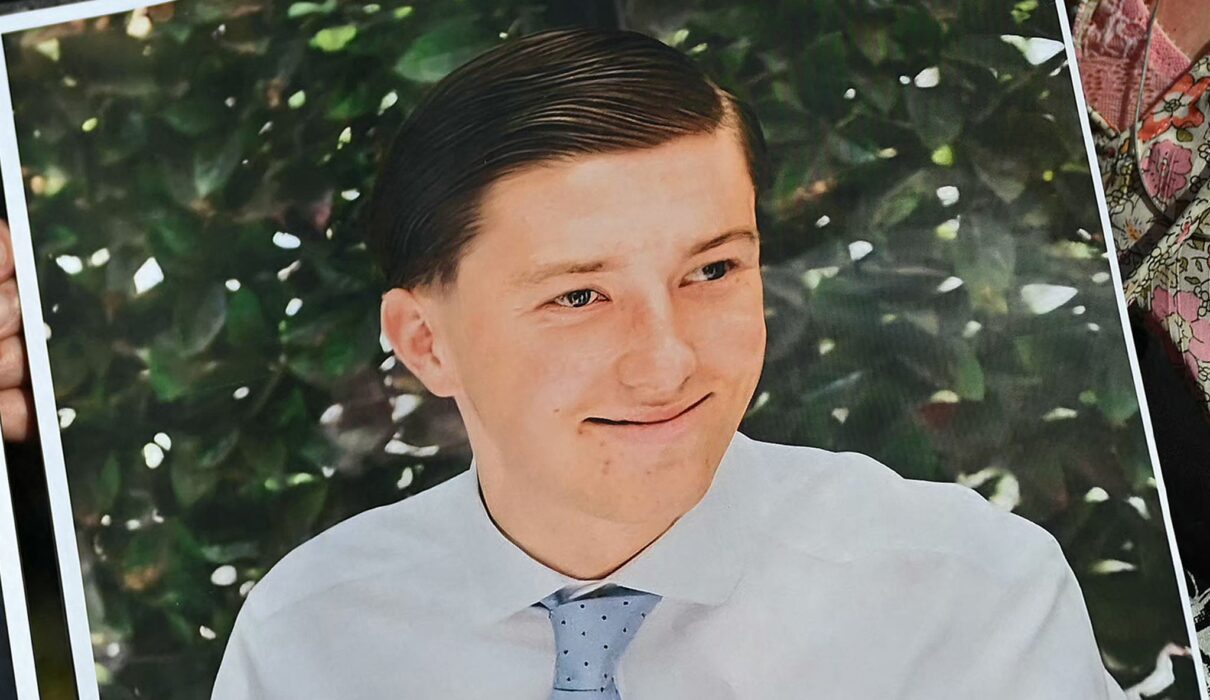
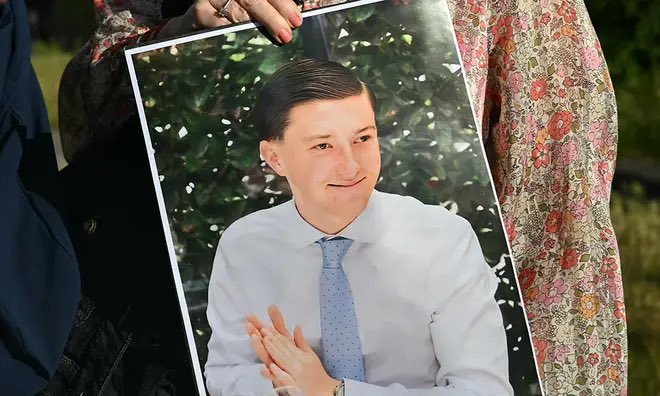
By As a British Sikh, I condemn without hesitation the killing of Henry Nowak.
His family deserve justice. They deserve answers. They deserve the space to grieve without their loss becoming a political football in Britain’s endless culture wars.
Any violent crime that takes a life is a tragedy. When such crimes capture national attention, they rightly provoke outrage, grief and difficult questions. Those responsible must face the full force of the law, and no community should seek to excuse criminality simply because the perpetrator may share their background, faith or ethnicity.
But something deeply troubling has emerged in the aftermath of the Henry Nowak case.
Before the facts had fully settled, before the courts had spoken, and before many people had even learned the details of the crime, sections of the British Sikh community found themselves thrust into the dock of public opinion.
Not as individuals.
Not as witnesses.
Not as citizens.
But as a collective.
This should concern everyone who believes in fairness, regardless of political persuasion.
When Does One Person Become an Entire Community?
One of the great strengths of modern Britain is the principle that individuals are responsible for their own actions. We do not punish families for the crimes of relatives. We do not prosecute neighbourhoods because of the actions of residents. We do not hold entire religions accountable for the behaviour of a single follower.
At least, that is what we claim to believe.
Yet time and again, when a crime involves someone from a minority background, that principle appears remarkably fragile.
A Sikh individual can commit a crime, and suddenly commentators begin asking questions about “the Sikh community.” A Muslim individual commits a crime, and an entire faith finds itself under suspicion. A migrant commits an offence, and millions of law-abiding immigrants are treated as though they share responsibility.
The logic is fundamentally flawed.
No serious person would suggest that the actions of one white British criminal represent white Britain. No one would argue that the crimes of one Christian reflect the views of every church-goer in the country.
Yet minority communities are frequently denied that same individual treatment.
The Henry Novak case has exposed this double standard once again.
The Rise of Manufactured Outrage
What has been particularly striking is how quickly some political activists and social media commentators attempted to transform a criminal investigation into a wider narrative about Sikhs.
For some, the case was never simply about Henry Nowak.
It became an opportunity.
An opportunity to generate clicks.
An opportunity to fuel grievances.
An opportunity to advance broader narratives about immigration, multiculturalism and minority communities.
The modern outrage economy rewards exactly this behaviour.
Social media algorithms do not favour nuance. They do not reward patience. They do not elevate careful analysis.
They reward anger.
They reward fear.
They reward tribalism.
The result is a constant search for examples that can be used to reinforce pre-existing political beliefs.
A tragic death becomes content.
A grieving family becomes a headline.
An entire community becomes a convenient villain.
This is not journalism.
It is not public service.
It is not justice.
It is exploitation.
British Sikhs Are Not Outsiders
What many of those pushing these narratives fail to understand is that Sikhs are not some newly arrived, unfamiliar group whose place in British society remains uncertain.
Sikhs have been part of Britain’s story for generations.
Our grandparents fought in Britain’s armed forces. They rebuilt communities after the Second World War. They worked in factories, hospitals, public transport, small businesses and public services.
Today, Sikhs serve as MPs, councillors, soldiers, police officers, teachers, doctors, judges and entrepreneurs.
They volunteer in food banks.
They organise community support networks.
They open gurdwaras to people of every faith and none.
When floods strike, when homelessness rises, when communities need support, Sikhs are often among those first to help.
None of this grants immunity from criticism. No community should be beyond scrutiny.
But it should at least earn the right not to be collectively condemned for the actions of an individual.
The Responsibility of Political Leadership
This is where political leaders must show courage.
The easiest path is to exploit public anger.
The easiest path is to point fingers.
The easiest path is to imply that entire communities share blame because doing so generates applause from a particular audience.
The harder path is to defend principles consistently.
If we believe in individual responsibility, we must apply it universally.
If we oppose prejudice, we must oppose it even when directed at unpopular groups.
If we believe in justice, we must reject collective blame whether it targets Sikhs, Muslims, Jews, Christians, Hindus, migrants or anyone else.
Real leadership means calming tensions, not inflaming them.
It means recognising that social cohesion is fragile and that careless rhetoric can have real-world consequences.
Words spoken by politicians and commentators do not remain confined to television studios or social media feeds.
They shape public attitudes.
They influence behaviour.
They affect how neighbours see one another.
A Familiar Feeling
For many British Sikhs, the reaction to the Henry Novak case has felt painfully familiar.
Our community knows what it means to be misunderstood.
We know what it means to be stereotyped.
We know what it means to be treated as representatives of a collective rather than as individuals.
The irony is that Sikhs have often found themselves victims of prejudice rooted in ignorance.
Many still remember the rise in hate crimes after 9/11, when Sikhs were targeted because attackers could not distinguish between different faiths.
Many remember being viewed with suspicion because of a turban or a beard.
Many remember being told to “go back home” despite being born and raised in Britain.
These experiences do not make Sikhs unique. Many minority communities have faced similar challenges.
But they do make us acutely aware of how quickly public discourse can shift from legitimate concern to dangerous generalisation.
The Britain We Should Defend
The real question raised by the Henry Novak case is not whether criminals should be punished. They should.
The real question is whether Britain will remain committed to judging people as individuals.
Will we allow grief to be weaponised?
Will we permit political opportunists to turn tragedies into ammunition against entire communities?
Will we abandon principles whenever doing so becomes politically convenient?
Or will we insist that justice remains blind to race, religion and ethnicity?
The answer matters because once collective blame becomes acceptable for one group, it can eventually be used against any group.
The protection offered by the rule of law depends on consistency.
So does social cohesion.
So does democracy itself.
Henry Nowak’s family deserve justice.
But justice is not served by condemning millions of innocent people who had nothing whatsoever to do with his death.
As British Sikhs, we mourn the loss of life. We support accountability. We support the rule of law.
What we cannot support is the cynical attempt to transform an individual’s alleged actions into a verdict on an entire community.
That is not justice.
It is prejudice wearing the language of politics.
And Britain should be better than that.